Frequently Asked Questions
Frequently bought together on the product page (shoppers tick the products they want), Buy X get Y, Mix & match, Volume discount, Gift with purchase, and three popups: on the cart page, right after Add to Bag, and on the thank-you page after the order.
On the page of the products shoppers buy, the offered products show with their discounted price. One offered product is discounted per product bought: 2 cameras, 2 discounted bags. 100% makes it free.
Shoppers pick any items from the group, also several of the same. The tier for how many they picked applies, for example any 3 for 15% off. A progress line shows how many more they need.
Each product on its own: 2 of the same for 5% off, 3 for 10%, as you set the tiers. A fixed amount is taken off per item.
The cart shows a progress line to the amount. Once the rest of the cart reaches it, shoppers add the gift with one click and one gift is free at checkout.
At checkout, when all the kit's products are in the cart. With tiers (Frequently bought together) part of the kit gets the tier's discount, for example 2 of 3 products 5%.
The discount is given only to shoppers who added the kit from the offer. When it is off, any cart with all the kit's products gets it, also when the products were added one by one. New kits have it on.
A percent discount is taken off every unit of the kit's products in the cart. A fixed amount is taken off once per order.
Yes: under Where & when switch on Only between dates. The kit and its discount run only on those days.
The first one in your list for that kind. Use the arrows in the list to change the order.
Check that: the app and the kit are switched on; today is within the kit's dates (if you set any); every product in the kit is in stock, switched on and not deleted; no product needs a file upload (shoppers have to add those on the product's own page); and you are on the page of a product in the kit. If another kit of the same kind matches the same product, only the first one in your list shows.
A kit with a product that is out of stock, switched off or deleted is hidden until the product is back, so shoppers never see a bundle they can't buy.
Orders placed in the last 30 days with a kit added from the offer, and their total.
Create dependent (conditional) product options, make them required or not, set prices, and apply rules. Pick from color and image swatches, dropdowns, radio buttons, checkboxes, text boxes, date pickers, file uploads and more, and decide how picking one option shows or hides other options.
You build an option set once and apply it to any number of products. You can also import the options of an existing product and add rules to them.
Shoppers only see the options that fit their choices, so product pages stay short and clear. The quick guide and the video linked at the top of this page walk through a first set.
1. Create a new option set, or import one from a product.
2. Add your options (or adjust the imported ones) on 1. Create options.
3. Add your rules on 2. Set rules (optional).
4. On 3. Apply to products, pick the products, or let products that match your conditions (category, price, date added) get the set automatically, then apply it.
On Option sets, type the product’s name or product ID in the search box and click Edit on its set. On 1. Create options, click the option to open it, then click a value to change its title, price, image or description, or use "+ Add new value". To show some values only for some choices (for example frames only for prints), add a rule on 2. Set rules.
Your edits are saved in the set as you go; press "Save all changes" to write them to the products too. The quick guide at the top of this page shows every step with pictures.
If it gets exactly the same options, open that set, go to 3. Apply to products, add the new product and apply. If it needs small differences, click Duplicate on the set in the list, rename the copy, change what’s different, and pick the new product on 3. Apply to products.
A name only you see, to tell options with the same or similar titles apart in the app (set it under the option’s More settings). Shoppers only see the option title. If a nickname is confusing, change it or leave it empty.
Yes. Open an option set and click "Edit all values in a table / CSV" above the options. Every value of the set is one row: change names, price changes (a number or a %), old prices, defaults, badges and add-on products in place. Tick rows to change many at once: set a price change, add to it, raise or lower it by a %, switch fixed / percent, set a badge, or delete them. Changed cells turn yellow; nothing is saved until you click Save under the table, then "Save all changes" writes them to the products.
Download CSV gives the whole set as a file for Excel, Google Sheets or Numbers (with a column per store language, descriptions and colors too); "Copy for a spreadsheet" copies it to paste into cells. Change it and bring it back with Import CSV (a file, or rows pasted from the spreadsheet). Values are matched by their Value ID; a row with no Value ID adds a value to its option; columns you take out are left as they are. Before anything changes you see what the file changes, and lines with a problem (a price that isn’t a number, an option that isn’t in the set, two values with one name) are listed with their line number. Values the file leaves out are only deleted if you tick that. Options themselves, rules and images are edited in the editor.
Yes: open the tab Sales Analytics. It counts your paid orders of the last 7, 30 or 90 days and shows how many had products with your option sets, what the options added to the price (value prices, price rules, per character and per unit), the added amount per order, and the sales of those products. Under it: orders per day, each option set, the options and values shoppers picked most (for text, date and file options, how often they were filled in) and the products.
An order counts for an option set when its product has the set now. Amounts are before discounts, taxes and shipping. Counting a big store can take a few minutes (up to 10,000 orders are counted, the newest first); the result is kept for an hour, and "Count again" counts the newest orders.
Yes, for 30 days. Your option sets are backed up automatically before you edit them and before a set is deleted. Open "Backups" under your option sets and pick a backup. "Restore one set" lists the sets in it: restoring one brings back only that set, and your other sets stay as they are. "Restore everything" puts all your option sets back as they were at that time (a set made later leaves the list). You confirm before anything changes, and your current sets are backed up first, so a restore can be undone too.
Not by itself. A restore brings back the option set in the app, and its rules, swatches and look on product pages follow it right away. The options saved on your products (names, values, prices the cart uses) stay as they are until you open the restored set and press "Save all changes".
Make sure the option set is applied to the product (3. Apply to products), and that you pressed the blue button to apply your changes. Rules and looks update on the product page within a few minutes.
Checkbox: shoppers can tick several values. You can set the least and the most values they can pick.
Radio button: one value at a time; it cannot be unselected, only switched.
Dropdown: one value from a list.
Swatch: a palette of colors or images; the picked one is outlined. In its Swatch settings it can also show as pills (a color dot before the name), or with a dropdown under the swatches.
Multi-select swatch: several colors or images at once, also with the least and the most picks.
Button: a box with the value name; one at a time.
Text box: one line of text, with an optional character limit and counter.
Multi-line text box: longer text, with an optional character limit and counter.
Number field: numbers only, with an optional minimum and maximum.
Range slider and number stepper (- / +): a number between your minimum and maximum, with a step and an optional unit (for example cm).
Email and phone number: a text field that checks the address or number before the product goes to the cart.
Color picker: shoppers pick any color; the order shows it as a color code (for example #ff8800).
Image cards: each value as a card with its image, price change and description; one value, or several with the multi-select type.
Content (heading, text, image, divider): not an option, only shown between your options to explain or split them. Rules can hide or show it.
Date picker: a calendar. You can block past dates, set the earliest and latest day, a date range, days of the week and single dates.
File upload: shoppers upload images, text or audio files.
A rule checks what the shopper picked (all or any of its conditions) and then can:
- hide options or values;
- show options or values (hidden until the rule is met);
- make options required or optional;
- preselect a value (once, when the rule becomes met; shoppers can still change it);
- show a message above the options or below one of them.
Yes: in the tab Look, texts and settings, pick Modern (soft filled fields), Pills (everything round, choices as chips) or Cards (choices in bordered boxes). Each card shows a small sample. The color of the chosen values and active fields works with every look, also with your store’s own. The store’s own fields stay, so the cart, the orders and your theme keep working. You can also show the chosen value and its price next to each option name.
Yes: in the tab Look, texts and settings, under Texts shoppers see. They come in 15 languages and follow the shopper’s language; type your own to replace one (pick the language at the top when your store has several). Option, value and group names are set in each option set: pick the language next to Texts in, above the options.
Yes: open the value, press Add-on product and enter the product ID (and a quantity, or leave it empty for the same quantity as the product). The value shows the add-on product’s price. When a shopper picks the value and adds the product to the cart, the add-on product is added as its own line, with its own price and stock. Keep the value price change at 0 so the price is not charged twice.
To let shoppers pick how many (for example 3 gift boxes), turn on "Shoppers choose how many" there and set the most they can take: a − / + counter with the total price shows under the option while the value is picked, and that many go to the cart.
Yes. Make a Button or Radio option (for example Font), and on each value press Font and pick one of the fonts: the value is then shown in that font. In the option’s settings, pick the text box under "Show the text in the picked font": under that text box, shoppers see what they typed in the font they picked. The order lists the font’s name like any other choice. The fonts come from Google Fonts.
Yes, three ways.
A rule can add to the price: pick the action "Add to the price", an amount or a % of the price, and the name the cart and the order show (for example "Silk XL surcharge"). All met rules add up.
A text box can have a price per character (spaces are not counted) and a number of free characters, for engraving or embroidery; up to 100 characters can be charged.
A number field, slider or counter can have a price per unit (per cm, per kg, per person) and units included in the price, for made-to-measure products. It needs a maximum, and up to 250 values from the minimum to the maximum by the step can be priced; a number between two steps is charged as the next step.
All three work through hidden options the app adds to the products when you press "Save all changes" ("Extra charges", "<option> - characters" and "<option> - units"), so the store charges them and the order lists them. The app keeps them hidden and filled in, and "Your choices" under the price lists them.
In the store, an option that isn’t required always has a value: its default value, the first one unless you pick another under the value (the app marks it for you). To have shoppers choose themselves, make the option required: it then starts with nothing chosen.
Yes: in the text box settings, pick letters only, numbers only, letters, numbers and spaces, anything except emojis, or your own pattern with its own message. You can also turn the text into capitals as shoppers type. The product can’t be added to the cart until the text is right.
Yes: under the option’s More settings, pick who sees it: only signed-in customers, only guests, only customers in some customer groups, or everyone except some groups (type the group names as they are in your store admin). For the other shoppers the option is hidden, like an option hidden by a rule. The preview has a menu to see the page as each kind of shopper.
In Product page layout: steps (numbered dots with the group names, Back and "Next step" buttons, and an optional last step to review the choices), numbered option titles, and a "Reset choices" link. Per option: show only the first values with a "Show all" link, and for swatches and image cards, show the picked value image as the product photo. Per value: a Sale, New, Popular or own badge, and an old price shown crossed out next to the price change (only shown; shoppers pay the price change). To add many values at once, use Paste several values below the values.
In your store admin go to Catalog, then Products, and open the product. The ID is the number after "id=" in the browser address bar (for example 239904127).
Fill in the option titles and the value titles for every language your store uses. The app matches them on the product page in the shopper language.
The store admin product preview does not run apps. Make sure the product is enabled, then open it on your storefront: the options and rules work there. The preview inside this app (1. Options and 2. Rules) shows them too.
Paste this into Custom CSS below and adjust the values (keep the second one 7px smaller than the first), then press Save:
.InApp_swatch { --in-app-switch-size: 130px; --in-app-switch-size-active: 123px; }
Paste this into Custom CSS below, change the color, then press Save:
.InApp_swatch .form-control__checkbox:checked ~ .form-control__inline-label, .InApp_swatch .form-control__radio:checked ~ .form-control__inline-label { border-color: #1a7ac4 !important; }
Only the reviews your customers wrote for your store: from your review request emails (marked Verified buyer) and from the "Write a review" button on your product pages. Google or Facebook reviews stay on those sites.
After an order reaches the status you choose (for example Delivered), the customer gets an email with the products they bought and 5 stars. Tapping a star opens a short page where they write the review.
Ratings below your threshold (4 stars by default) open a private message to you instead of the review form, so you can make it right. Nothing is published.
Add your Google review link under "Your Google, Facebook... links" and choose where it shows: after their review, next to the review form, or instead of it.
Reviews from your emails can be published right away ("Publish reviews right away"). Reviews from the product page form always wait for you under Reviews.
Turn on "Show reviews on my store": a reviews section on product pages, stars under product names and on product cards, the newest reviews on the home page, and stars in Google search results.
The number of emails included in your plan is shown under "When it goes out" and resets every month.
Amazon Pay enables you to offer Amazon customers an easy, secure, and fast way to check out on your site using the shipping and payment information stored in their Amazon account. Beyond the button, Amazon Pay is also an easy way to integrate Alexa into your commerce strategy and is the place where shoppers manage their payment methods on Amazon.com.
This app helps you to bridge the communication between your store and Amazon Pay and offer you customers ability to pay with a very known and reliable service of Amazon. All you have to do is configure fields above with correct data and you are good to go.
Navigate to Amazon Pay and register your business account. After you successfully created an Amazon Pay account you can continue with instructions below.
Follow this tutorial and you will be able to copy/paste all details. You can also check the official video from Amazon Pay.
Yes. Add several messages to a bar and they rotate automatically, with arrows or dots if you want them. You can also have several bars, for example one at the top and one at the bottom.
Turn on the close button. Under "Keep closed for" you choose how long it stays closed for that visitor before it shows again.
Top bars can stay visible while the visitor scrolls ("Keep top bars visible while scrolling"); turn it off if you want the bar to scroll away with the page.
Yes, each bar can be shown on desktop, mobile or both.
Yes. In a bar's "Who and where" tab choose Customers: signed-in customers, guests, or one or more customer groups - for example a bar with your VIP discounts and contact on the account pages, shown only to your VIP group.
Yes. Under "Cart subtotal" choose "Less than" or "More than" an amount. For example "Free shipping from $50" while the cart is under $50, and "You've unlocked free shipping!" once it's over. The bar updates as soon as the cart changes.
Yes. The Schedule tab has start and end dates, days of the week and daily hours, in your store's time zone or the visitor's.
Add a message with your offer and a link (to a category or product). Use the countdown style for limited-time sales so shoppers see how long it lasts.
No - the bar shows the way, your store gives the reward. For each step, create the matching free shipping rule or discount in your store settings (for example free shipping on orders over 50). Then the amounts in the bar and in your store match.
Check that the app is enabled at the top, that at least one step has an amount and both texts, and that the places you want (product page, cart, top bar) are switched on under Where & look. If you chose categories, the bar only shows on products from those categories.
Open a step and search the product under Free gift. Set that product's price to 0 in your catalog, without options. It's added to the cart when the step is reached and taken out again if the cart drops below it. Switch on "Hide gift products from category pages" so shoppers don't find it on its own.
Products from your catalog priced close to what's still missing, cheapest first, with an Add button. Products already in the cart and gift products are left out. Products with options open their page.
By default the subtotal: the products, before shipping. You can switch to the order total, with or without taxes, under the steps. Free gift products don't count toward the amount.
Yes. Every text has a field per store language (the small language buttons). Empty fields show the text of your main language. {{amount}} is shown in each shopper's currency if you use our Currency Converter.
Yes, under Who sees it: by device, customer group and country. The country is known once a shopper is logged in or has entered an address; until then the bar shows.
Each shopper once: when they saw the bar, when they reached every step and when they placed an order. Reset counts starts over.
When an order reaches the status you pick (for example Delivered), the customer gets one email after the number of days you set, with products picked for them and, if you want, a personal discount code. Emails go out every 15 minutes.
For each order the app picks products often bought together with what the customer bought, then products from the same categories, then your best sellers. It never shows what they already bought or products that are sold out.
Every customer gets a new one-time code, valid for the products in their email (or your whole store when the email has no products). You can set how many days it is valid; the email then shows the end date.
If the customer didn't click the first email, a short second one goes out a few days later with the same products and the same code. Turn it on under When.
Yes. If you edited your email before, it stays as it is under Email - Your own HTML. Pick a ready design whenever you like; you can switch back until you save.
Yes, every email has an unsubscribe link at the bottom. Customers who unsubscribe get no more emails from the app.
No. Only orders that reach your status while the app is on get an email, and an email that has waited more than 30 days (for example while the app was off) is not sent anymore.
Under Results: emails sent, opened and clicked in the last 30 days, and the orders that used an email's discount code with their revenue.
Either the products you pick, or every product that matches the rules you switch on: on sale, low stock, in or out of stock, new, bestseller, category, price or keywords. With several rules a product has to match all of them. You can also leave out single products.
On the product pictures in every product list of your store (category pages, search, the home page, related products) when Show on product cards is on, and on the product page: on every picture, next to the product name or under the price.
All of them, in the order of your list (use the arrows to change it). Under Store options you can show at most a number of labels per picture: then the first ones in your list win.
Any text, in every language of your store. These words are filled in for each product: {percent} the discount, {saved} the amount saved, {stock} the items left, {price} the price, {ends} the day the label ends (with dates set). A label with {percent} or {saved} shows only on products with a discount, one with {stock} only on products with a stock count.
From your paid orders of the last 30 days: the products with the most units sold. The list is updated every night, or right away with Count now under Store options.
A product is on sale when it has a compare-at price above its price. You can ask for a minimum discount, for example 20% or more.
Yes: under When switch on Only between dates. The label shows from the first to the last day (both included). Show the end date adds a line like "Ends Sunday" from the label's real end date.
Text labels (pill, rounded, rectangle, outline, soft, frosted glass, two-part, tag, ticket, sticker), labels on the picture's edge (banner, corner ribbon, corner flag, bookmark) and round badges (circle, seal, starburst, stars, hexagons, shield). Any of them can have a small icon in front of the text, like a flame, a truck or a leaf. Labels made with the older shapes keep them; you find those under Older shapes.
Yes: choose the Image design and upload a picture, for example a "Vegan" or "Made in Italy" icon. A PNG with a transparent background looks best.
Check that: the app and the label are switched on; today is within the label's dates (if you set any); the product matches the label's products or rules; and the place is switched on (product cards or the product page). Labels on product cards need Show on product cards.
Yes. Reorder top level items with the arrows, and for every category choose how its subcategories are sorted, or set the order by hand.
Yes. Each dropdown can show category images, a banner with your own image and link, or a row of products.
Shoppers spin the wheel to win a prize - a discount code you created - and the code is shown right after the spin.
Each slice has its own chance. A slice without a code is a "no win".
Create the codes under Marketing → Discount coupons in your store admin first, then enter one code per slice.
Yes. Turn on "Ask for an email before spinning". Shoppers are added to your store's customers with marketing consent, and optionally to a customer group.
You choose under "Each shopper can spin", for example once, or once a day.
After the page loads, after scrolling, or when the shopper is about to leave (computers). The opener button can hide once they've spun.
Always in your store's currency: checkout and payment can't change it. The app shows prices in the shopper's currency so they understand them; the payment provider converts at its own rate. Switch on the checkout note (Checkout tab) to tell shoppers this in the cart and at checkout.
From a public exchange-rate source, updated once a day. The date of the rates in use is shown on the Currencies tab. You can set your own rate for any currency, or add a markup on top of the daily rate, on the Prices tab.
A currency the shopper picked in the switcher always wins. Otherwise, if you set a currency for the storefront language, that one is used; otherwise the currency of the shopper's country (switch Pick by the shopper's country off to start everyone in your store currency).
They make converted prices look like real prices: .99 turns 53.42 into 53.99, .95 into 53.95, whole numbers into 53, and round to 5 or 10 turn 53.42 into 55 or 50. Prices under 1 (or under 5 and 10) are left as they are. Each price is rounded on its own, so a cart total can differ slightly from the sum of its rounded prices.
Card payments in another currency usually cost the shopper a little more than the daily rate. A markup of 1-3% makes the converted price closer to what they will really pay. It is added to the daily rate only; your own fixed rates are used exactly as you enter them.
Converted price replaces your price and is the cleanest. ≈ in front makes clear it is an estimate. Original on hover shows your store price when the shopper points at the price. Both prices keeps your price and adds the converted one next to it.
Yes: on the Currencies tab tick only the ones you want. Pin up to 12 with the star to show them at the top of the list.
Yes: on the Currencies tab choose a currency for each language of your store, for example German → EUR. It is used until the shopper picks a currency in the switcher.
Keep Hide prices until converted switched on (Checkout tab): prices stay hidden for a moment until they are converted, at most 1.5 seconds.
Check that the app is enabled, the placement is not Hidden and the switcher is not hidden on that page (Switcher tab). With Before or after an element, the element you entered must exist on the page.
When a shopper with items in the cart is about to leave: the mouse leaves the page (computers), they scroll back up quickly or stop touching the page (phones), or they come back to your tab. You choose which of these triggers to use.
It only shows to shoppers with a cart, and you can set a minimum cart value, skip the first visits and pause it for a day after it's closed. Each shopper sees it once per pause.
Yes. Create a coupon under Marketing → Discount coupons in your store admin, then enter its code here. The popup shows the code with a Copy button and can add a countdown to make it urgent.
When a shopper switches to another tab, your store's tab title and icon change to remind them of their cart (for example "Your cart is waiting" and the item count).
Yes. Set your free shipping amount and the popup shows how much more they need to add to get free shipping.
Short full screen slides, like on Instagram, with your products. Shoppers tap through them and add products to the cart right from the story.
As a row of circles on your store pages - on every page or only on chosen ones. On product pages you can show only the stories with that product.
Stories use images and your product photos. Video hosting isn't included.
Watched stories get a different ring color, and new stories can be shown first.
Yes. Each product slide shows the price, options and an Add to cart or Buy now button.
Every visitor sees it once when they first open your store. After they confirm, they aren't asked again for the time you set under "Remember a visitor for".
Check the tab "Where to show": with nothing picked it shows on every store page; with pages or categories picked, only there. "Home page" only exists in stores made with the store's website builder: if your store is part of your own website (for example WordPress), it never matches, and the app only runs on the pages that show your store, not on your website's other pages. Remove "Home page" and pick categories, or leave everything empty.
A visitor who already confirmed isn't asked again for the days set under "Remember a visitor for": to see the popup again, open your store in a private window.
They can't continue to your store. You choose what they see instead, for example a message or a link to another page (the second button).
No. The popup is drawn on top of your store after it loads, so your pages stay the same for search engines and load as fast as before.
Yes. Under Popup you can add your logo, colors, corners and your own background image, and check the result in the live preview on desktop and phone.
The age check is a confirmation, not an ID check. It shows the warning required in most countries and records that the visitor confirmed their age; it can't verify a real ID.
Paste the links to your posts. The app shows them as a video wall or slider on your store.
Yes. Add products to a video and shoppers can open or buy them right from the video.
No. You only paste links to public posts; nothing has to be connected.
Choose where on the page it shows, how many videos per row on computers and phones, and whether videos play muted when they come into view.
Videos load only when they come into view, so the rest of your page loads as usual.
Under the week days set the hours for each day (several time ranges per day are possible), or mark a day as closed all day. Copy one day's hours to the others in one click.
A banner, bar or popup with your message and when you open again. You can hide the Add to cart buttons while closed, or keep taking orders and show a note like "Orders placed now ship on Monday".
Add holidays (single days or date ranges, repeating every year if you want), or turn on vacation mode with its own message and dates.
Your store's time zone, so opening times are the same for every visitor wherever they are.
Yes. Mark every day as closed all day and hide the Add to cart buttons; your products stay visible but can't be ordered.
Yes. Turn on the opening hours widget: an "Open now" badge with your full weekly hours.
Zip is a global payments company headquartered in Sydney, Australia. Founded in 2013, Zip is an ASX-listed (Z1P) pioneer in the buy now, pay later category.
Zip serves:
*Five continents
* 80,000+ merchants
* 9.5 million customers
In order to use this app successfully, you must have a valid Zip merchant account. Once you do that, copy the API keys into the fields above and save the changes. You toggle between Test and Live mode in case you want to test the connection to the Zip first.
Once you mark your order Fulfillment Status as 'Ready for Pickup' or 'Shipped', the app will automatically try to capture the funds for the order.
Yes. Simply mark your order Payment Status as 'Refunded' and the app will automatically try to issue a refund for the order.
Yes. Simply mark your order Payment Status as 'Cancelled' and the app will automatically cancel it and try to issue a refund for the order.
We suggest the following link. Choose your country/region and then locate the "Help" link in the top menu.
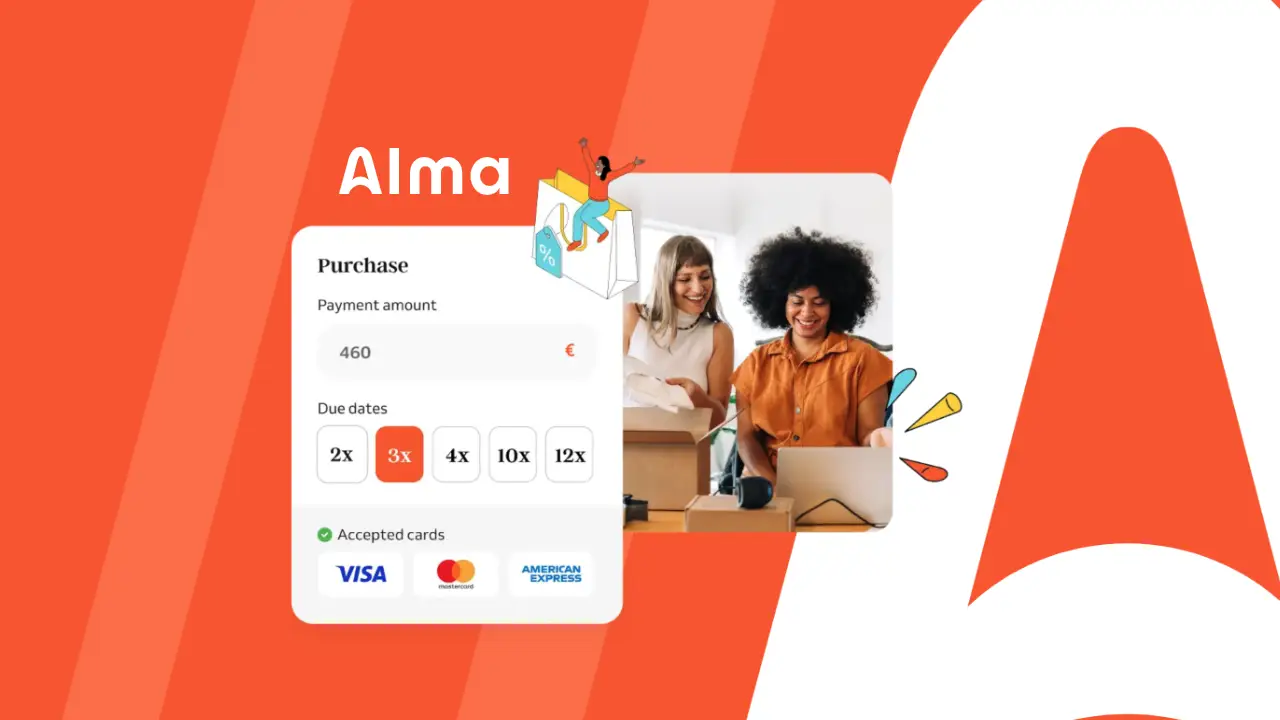
Alma offers a more flexible shopping experience with split payment. When your customers choose split payment, they manage their expenses as they wish and are more easily tempted by pleasure purchases.
In order to use this app successfully, you must have a valid Alma account. Once you do that, copy the API keys into the fields above and save the changes. You toggle between Test and Live mode in case you want to test the connection to the Alma first.
As mentioned in the Answer above, if the product price is lower than €50 or higher than €2,000 widget won't be shown because that product is not eligible for payment with Alma.
We suggest the following link.
Viva Wallet is the first European entirely cloud-based Neobank, using Microsoft Azure with presence in 24 countries in Europe.
Viva Wallet is a Principal Member of Visa and Mastercard for acquiring and issuing services.
In order to use this app successfully, you must have a valid VivaWallet account. Once you do that, please follow the instruction.
Card payments by your customers, can be accepted in any currency and the amount will be converted to your Viva Wallet account currency with the card schemes' daily exchange rate. Note: Your e-shop's currency must match your Viva Wallet account's currency.
The minimum cart amount has to be equal or greater than 30.
>We suggest the following link.
PayPlug is the first omnichannel payment solution designed for SMEs.
PayPlug serves: 15,000+ customers
In order to use this app successfully, you must have a valid PayPlug account. Once you do that, copy the API keys into the fields above and save the changes.
We suggest the following link.
On product pages, once the shopper scrolls past your Add to cart button. It slides away again when the button is back in view.
Yes. If the product has options, the bar's button takes the shopper to the options first, so nothing is added with a wrong choice.
Yes. Turn on "Match my store's button" to use your theme's button style, or pick your own colors and corners.
Yes. Show it on desktop, on mobile or on both.
Yes. Turn on the Buy now button to take shoppers straight to checkout with the product.
On product pages under the Add to cart button, under the price or the product name, or after the description; in the cart under the Checkout button; in the footer of every page; or next to any element you choose. Each block of badges has its own position.
Yes. Pick from the built-in library (payment methods, carriers, guarantees) or upload your own images under "My uploads".
The ones your customers can actually use at checkout - showing familiar payment logos near the buy button builds trust.
Yes. Badges wrap to fit small screens. Check the phone view in the live preview.
Yes. Each block can have an optional heading, translated into your store's languages.
Each picture of the product (main, gallery and variation pictures) is saved again as WebP, a modern format that is much lighter at the same look. A picture is only replaced when the WebP copy is smaller; the others stay as they are.
No: an optimized picture replaces the original in your store. Check a picture before and after first, and keep your own copies if you may need the originals again. The list of replaced pictures shows what was changed.
85% looks the same as the original for almost every photo and is much lighter. Go lower for even lighter pictures, higher for pictures with fine text or patterns.
Yes. The job runs on our server and goes on when you close the app; if it is interrupted, it goes on by itself a few minutes later.
Up to 300 products a month, nightly runs included. Category pictures are not counted.
Every night the products you added or changed since the last night are optimized with your quality setting, until the monthly limit is reached.
Pictures without alt text, heavy pictures, small main pictures, products without pictures, short descriptions and products with the same name. Alt texts and heavy pictures can be fixed in one click; for the rest, open the product and change it.
From the product name, in every language the name has. Alt texts you already wrote are never changed.
Your store fills those in automatically from the product name and description; you can change them on the product's page in your store admin.
You choose: after a delay, after scrolling, when the shopper is idle, or on later pages. You can also limit it by cart value, products in the cart, time of day and device.
Yes. Turn on "Collect emails" and the offer asks for an email (and optionally a name) before showing the coupon. Signups become customers in your store who accepted marketing emails.
Create it under Marketing → Discount coupons in your store admin and enter its code in the offer.
No. Under "After it's closed, hide it for" you choose how long it stays hidden, and it can stop showing for good after the shopper uses it.
Yes. Add several offers with their own conditions; the first matching one is shown.
You sell products with your designs; Printify prints and ships each one when it is ordered, so you keep no stock.
As soon as it is paid. Orders paid later (bank transfer, cash on delivery) are sent when you mark them as paid. Only the Printify products of the order are sent; your own products stay with you.
Not right away. It arrives "On hold" in your Printify shop and goes to production by your Order submission setting in Printify (printify.com/app/store/settings/order-settings): by default 24 hours after it arrives (so you can still change or cancel it), after 1 hour, at a set time each day, or only when you click "Submit order" yourself (Manual). Orders with personalizable products always have to be submitted by hand.
We emailed you the reason Printify gave (for example a product or address problem). Fix it, then press Send now next to the order under Orders.
Only published products sync: publish it again in Printify. If it still doesn't come in, check the Health check under Overview and save Automatic sync once more.
Some data comes in bulk and needs a few minutes. Wait up to 10 minutes, then check again; if something is still missing, import the product again.
Yes. When a product is published again in Printify, its Printify images are only replaced if they changed in Printify; photos you uploaded to the product yourself stay, and a product you hid in your store stays hidden. Prices come from Printify: change them there.
No: the SKU tells the app which Printify product and variant it is. Changing it stops orders and updates for that product.
Find it under Products (filter Locked) and press Unblock. Printify then shows it as "Publishing error" and you can edit and publish it again.
The rates Printify calculates for their address. When the cart has your own products too, the Printify rate covers only the Printify products: your own products are not included.
In Printify: Manage stores > Add new store > API (custom integration). Products must be published to that shop to sync.
Each offer has its add-on products and a place where they show: under the cart item they belong to, on that product's page, under the cart total or under the Checkout button. Shoppers add an add-on with one click.
Yes. Under Where, pick the products and / or the categories the add-ons are for. A new product in one of those categories gets the add-ons without any change.
Shoppers see the add-ons as ticks under Add to Bag. The ticked ones go into the cart together with the product. Add-ons with required options ask for them first.
Yes: under Quantity & dates pick "Same as the product". A shopper buying 4 tires gets 4 valve caps. You can also add a fixed number, or one.
Shoppers pick the options in a small window before the add-on goes into the cart. Subscription-only products are added as a subscription.
No, add-ons are added at their normal price. To give a discount, create a discount in your store for those products.
Yes, the add-on prices show in the shopper's currency.
It adds a button to your product cards that opens the product in a popup: photos, price, options, stock and Add to cart - without leaving the category page.
Yes, with all product options, quantity and the right price for the chosen variation. After adding you choose what happens: stay, close the popup or go to the cart.
Yes. All option types are shown; when a shopper picks a variation, the price, stock and photo update to that variation.
Product names, descriptions and options show in the shopper's language. The popup's own buttons and labels can be translated in the settings.
Every night we compare all your products - names, descriptions, categories and prices - and look at what your customers bought together. For each product we keep the best matches. In stores with descriptions we also use AI to understand what a product is, so "linen shirt" can match "summer trousers" even without shared words.
Right after installing, the first analysis takes a few minutes (longer for very big catalogs). The blue note at the top disappears when the lists are ready. Also check that the block is switched on under Recommendations and saved.
No. The heavy work happens at night. On your store the script asks for a ready list and loads the products after the page itself, so your pages open as fast as before.
It adds the product to the cart right away and shows "Added". Products with options (size, color...) or subscriptions open their product page instead, so the shopper picks the right variant.
No. Products that are out of stock or disabled are skipped, and the next best match takes their place.
Products that go with what the shopper looked at earlier (remembered in their browser). New visitors see your bestsellers.
Yes. Each block has a "Where on the page" setting. If your theme needs a special spot, choose "Below an element" and paste the CSS selector of any element on the page.
Clicks on a recommended product and "Add to cart" on its card, per block, for the last 30 days. They are counted from the day this version was installed.
The order is calculated in the nightly analysis. Click "Analyse now" under Settings to apply it within minutes.
Yes. Every title and button text has a field for each of your store's languages. Empty fields use our translation (English, German, French, Spanish, Italian, Dutch).
You sell products with your designs; Gelato prints and ships each one when it is ordered, so you keep no stock.
As soon as it is paid. Orders paid later (bank transfer, cash on delivery) are sent when you mark them as paid. Only the Gelato products of the order are sent; your own products stay with you.
Yes: orders arrive in Gelato as drafts. Open them in your Gelato account and move them from draft to active so they go to production.
Yes, if you choose "Automatically, 24 hours after the order" under Account & sync (it is off unless you turn it on). Orders still arrive as drafts; 24 hours later the app sends each one to production, unless you deleted or confirmed it in Gelato, or the order was canceled in your store. Once in production, Gelato prints, ships and charges you, and the order can no longer be canceled.
We emailed you the reason Gelato gave. Fix it, then press Send now next to the order under Orders.
Gelato's production price for one item in your store's country and currency, as a starting price: set your own selling price in your store. When the product is updated in Gelato later, your prices stay as you set them (product and variations); only variations that are new get Gelato's price.
The images Gelato gives connected stores for the product: the main image and any others Gelato adds to it. When the product is updated in Gelato, its images are only replaced if they changed in Gelato; photos you uploaded to the product yourself stay.
Check the webhook in your Gelato account (see Automatic sync under Account & sync for the address, events and authorization), or import the products under Products.
The rates Gelato calculates for their address. When the cart has your own products too, the Gelato rate covers only the Gelato products: your own products are not included.
In your Gelato account: the API key under Developer > API keys, the store ID in your Gelato store's address.
Options you created with the Color swatches type (with the colors you picked for them), and dropdowns or buttons whose name you add under "Dropdowns and buttons with these names", for example Color or Colour.
The app couldn't find a color for that name. Add it under Your colors (with one or more colors), or under Color list type your own name next to the matching color, for example "Rood" next to Red.
Name the choice with both colors, for example "Navy/White" - the split character is set under Your colors. For a specific mix, add the name under Your colors with up to 4 colors.
On product pages instead of the dropdown, and on every product card: categories, search, home page sections, related products and recently viewed.
Yes. Hovering (or tapping on phones) a swatch on a card shows the photo of that color's variation, and "Inside the swatch" can use the product photo instead of a flat color.
Under "Sold out colors" choose to cross them out, fade them or hide them on cards. A color is sold out when all its variations are out of stock.
A small teaser that follows the shopper on the page. When clicked it opens a sidebar with your offer: a discount code, products and an optional countdown.
Create the coupon under Marketing → Discount coupons in your store admin, then enter its code in the offer. Shoppers see it in the sidebar with a Copy button.
Yes. Each offer has a schedule, so it only shows during your sale, and you can show it on all devices or only on desktop or mobile.
No. The countdown runs to the end of your offer, so everyone sees the same time left - no fake timers.
Yes. Add several offers with their own schedules; the first one that is on and in its schedule is shown.
Add lines like [tab name='Size & fit'] to a product's description in your store admin. Everything until the next [tab ...] line or [endtab] becomes that tab.
Yes. Under "Tabs on every product" write a tab once (shipping, returns, warranty) and show it on all products or only in chosen categories.
Choose one of the layouts (classic, underline, pills, cards, vertical, accordion), your colors and icons, and check them in the live preview.
You choose: tabs stacked above the content, or an accordion with the first tab open or all closed.
Yes. Add #tab-name to the product link, for example #tab-care, and the page opens with that tab.
Each pricing set has its prices (for example Retail 20 and Wholesale 15), rules for who gets which price, and the products it prices. When you save, the app gives those products all the set's prices as price choices. On your store, each shopper sees only their price - the others stay hidden.
They get the set's default price. When several rules match, they get the lowest of those prices.
Never less than the "Lowest price anyone can pay" of the set (by default your lowest price): your store refuses smaller amounts, whatever a shopper tries. A determined shopper could still reach that lowest price, so keep it at a price you are happy to sell at.
You choose under "On category pages": each shopper's own price, no price, or the lowest price of the set. Rules about product options or quantity count on the product page only.
No, one set per product. Adding a product that is in another set moves it.
When you save, those products go back to the set's default price and the price choices are removed.
Create the groups in your store (for example Wholesale) and assign customers to them. Add a rule "Shopper is in the customer group Wholesale" and pick the wholesale price. Customers see it once they are logged in.
Yes: "date is between", "time of day is between" and "link has the parameter" (for example your newsletter link with ?promo) give a special price only for that campaign.
Yes, your options' price changes are added to the shopper's price as usual.
In the checkout's order summary as its own line with your fee name, and later in the order confirmation and on invoices.
Yes. Add conditions: cart subtotal, products, categories, shipping country or state, delivery (only orders shipped or delivered to an address, not in-store pickup), payment method, customer group or coupon. Combine them with "All match" or "Any matches".
Yes. For a percentage fee set "At least" and "At most", for example 3% but at least $1 and at most $20.
Yes. For a per item fee, add "Count a pack or case as more items": by product, category or a product option the shopper picks (e.g. Pack size: 12-pack counts as 12). A $0.75 per item fee is then $9.00 for a 12-pack.
Turn on Taxable for a fee to add tax to it, like to your products. Leave it off for fees without tax.
Use the Preview on the right: pick products, country, payment method and coupon, and see exactly which fees your customers get - with the same rules as your checkout.
Yes. Turn on "Only between dates". Both days are included, in your store's time zone.
Yes, with a little CSS. The fee line is drawn by your store's checkout, and this app adds nothing to your storefront, so the look can't be set here. Add the code below to your website's custom code for the page header (in your website editor's settings), and change the values to match your design:
<style> .ec-cart-summary__row--surcharge .ec-cart-summary__title { font-weight: 700; color: #555555; font-size: 15px; } .ec-cart-summary__row--surcharge .ec-cart-summary__price { color: #555555; } .ec-cart-summary__row--surcharge .ec-cart-summary__cell { padding-top: 6px; padding-bottom: 6px; } </style>
The first part is the fee's name, the second its amount, the third the space around the line. It works in the cart and on every checkout step. All fee lines share these classes, so the style applies to each of your fees.
In the cart and at checkout, as their own lines. Product pages and category pages keep your normal prices, so brands that don't allow advertised discounts are fine.
Only when the cart is close to a discount but hasn't reached it yet: one of the discount's products is in the cart and the shopper still needs to add items or spend more (a minimum, the next tier, the second item of a Buy one get one, the rest of a set). As soon as the discount applies, the message goes away and the discount shows in the cart totals by its name. A discount with no minimum applies right away, so it has no cart message. Shoppers who can't get the discount (for example the wrong customer group, or outside its dates) never see it.
By default it gets only the best one (20% wins over 10%, they never add up). You can switch to "All of them, added up" under How discounts work together.
A little. The arrows next to each discount set its place in the list. 1) The cart shows the discount lines and teasers in this order. 2) Offers - Buy X get Y, N for a price and Bought together - go through the cart from the top of the list down, and an item one offer has used isn't used by another, so when two offers share products, put the one you prefer higher. 3) Plain discounts (percent, amount, tiers) don't depend on the order: each item simply gets the best one, or all of them added up if you chose that. Only when two give exactly the same amount does the higher one get its name in the cart.
By default each item gets whichever is larger: the coupon or the automatic discount. With a 15% coupon, an item on 20% stays at 20%, an item on 10% gets 15%, and items without an automatic discount get the coupon's 15%. You can also choose no automatic discount where the coupon applies, or both.
The shopper adds the items to the cart; as soon as a group is complete (for example 2 items for "buy 1 get 1"), the cheaper item is discounted - free or by the percent you set. Every complete group counts, unless you set a limit per order. Items can be mixed: any two products from the offer form a pair. With "Other products", the shopper buys from one set and gets the cheapest item of the other set.
Yes. Pick brands under Brands: they are your products' Brand attribute. Any other product attribute works too, under Product attributes.
No. A shipping method's minimum order compares the subtotal before discounts, so an order that qualified for free shipping still does.
Yes. Fees from other apps (for example Smart Cart Surcharges) are added as usual; percent fees are worked out on the total after discounts.
A kit is a single offer, a bundle, a popup, a cart upsell, a checkout-step widget, and it works on its own the moment it's active - no funnel required. A funnel just links two or more of your existing kits together so one leads into the next, for example an initial popup that, if closed without adding anything, reveals a better offer. A funnel never creates a new kit and never changes how a kit behaves when it isn't part of one. Most stores never need one.
No. Independent kits are the default and cover the vast majority of use cases. Reach for a funnel only when you want to deliberately sequence two or more kits, "if declined, show this instead" or "after they add this, offer that." Everything else should just be its own kit.
No. Only one popup shows on screen at a time, so shoppers never see two overlays stacked on each other. If more than one becomes eligible at the same moment, an independent popup takes priority over the opening step of a funnel, and whichever loses out waits its turn and shows once the first one is dismissed or resolved.
Almost immediately - saved changes sync straight to your storefront the moment you hit Save, with no cache delay in between. A background check also re-syncs everything every few minutes as a safety net, in the rare case that first sync doesn't land (a closed tab mid-save, a brief connection hiccup), so nothing can drift out of sync for more than a few minutes even in the worst case.
It blends two signals: products your customers have actually bought together in the past (from your paid order history) and products that are simply similar to what's currently being viewed. A brand-new store with little order history leans almost entirely on similarity at first, and automatically shifts toward real co-purchase data as more paid orders come in - no action needed on your part for that shift to happen.
Two different places, doing two different jobs. "Let AI pick" kits and the AI picks banner use a recommendation engine that studies which products your customers have actually bought together, blended with product similarity, so every shopper sees picks personalized to them instead of one static bundle shown to everyone, and it keeps getting better on its own as more orders come in, with zero upkeep from you. Separately, "Describe it, let AI build it" on the New Kit screen uses generative AI (Anthropic's Claude): you describe the offer you want in a sentence, and it selects real products from your own catalog and writes the headline, subheadline, and button copy for you, then hands you a draft to review before anything goes live. The benefit either way is the same: better-targeted offers with far less manual product-picking and copywriting on your end.
It re-scans your store's paid orders from scratch and rebuilds the "frequently bought together" data used by "Let AI pick" kits and the AI picks banner. It runs in the background, so you can keep working while it processes, and the dashboard checks in automatically every few seconds and lets you know the moment it's done, no manual refresh needed. You generally only need to run it once when you first install the app or after a large batch of historical orders gets imported; new orders placed afterward are picked up automatically without needing another rebuild. Running it again is harmless and simply recounts everything from the current order history.
Once a variant reaches at least 20 impressions, whichever has the higher conversion rate is marked "Leading." Below that threshold, it's deliberately too early to call, so no leader is shown yet, calling a winner off a handful of impressions would be misleading. Split tests only compare kits of the same type on the same surface that share a variant label (A, B, C, D), and the easiest way to set one up is the "Duplicate as a new variant" button in a kit's editor.
For product, cart, and checkout kits, yes: once a shopper has every product a kit's discount applies to in their cart, the discount applies automatically at checkout, no code needed. A kit can also be set to apply its discount as soon as any one of its products is in the cart rather than requiring the whole bundle - that's the "Applies when" setting in a kit's Discount section. Separately, "Counts when added" can restrict the discount to only fire when a shopper actually used that kit's own Add button, rather than however the products ended up in the cart - this is best-effort, not an ironclad guarantee, since Ecwid gives no fully reliable way to prove after the fact exactly how an item was added. A post-purchase (thank-you page) offer works differently altogether: accepting it issues a one-time discount code for the shopper's next order, since Ecwid doesn't support charging an order that's already been placed.
Yes, wherever a bundle shows more than one product with a combined "Add bundle" button, each product has its own checkbox so a shopper can deselect items they don't want before adding the rest. Kits where every product has its own fully independent Add button don't need this, there's no combined action to select for.
Each kit has a Placement setting: below the product info (the default), below the price, or below Add to Cart. If your theme doesn't have the exact spot chosen, it falls back automatically to the next best match rather than not showing at all. For anything more specific, the advanced Custom CSS selector field lets you pin a kit to any element in your theme.
Active kits are live on your storefront right now, matched against their targeting rules on every relevant page view. Paused kits stay fully configured, exactly as you left them, but simply don't show anywhere until switched back to Active. Pausing is the safe way to temporarily turn something off without losing its setup.
Everything tied to your store is deleted: kits, stats, coupons, and the "bought together" product pairs learned from your order history. Reinstalling later starts completely fresh.
We are here for you. You can use our in-app chat (bottom right corner to activate) or send us an email on admin@infiniteapps.net
Hit us up and we'll get in touch with you.
With Alma Pay in installments you get 15% to 20% in turnover on average, thanks to an increase in the average basket, a purchase trigger and customer loyalty who return more easily to the site.
Create Alma account
100% Free to use
Create FREE Printify account
900+ High-Quality Products
Largest global print network
90% of all orders are produced locally
Create FREE Gelato account
90% of orders arrive within 5 days of ordering
140+ print providers across 32 countries